

Title: “What Algorithms for Causal Discovery Can Do”
Professor Clark Glymour
Alumni University Professor
Carnegie Mellon University
Abstract:
Some strategies of search algorithms for causal relations using data and limited background knowledge are described: PC, FCI, GES and BOSS. Examples will be given of independently tested predictions, including: identifying environmental factors influencing bolting time in a plant species; identifying gene regulators; cause of anomalies in features of trans-Neptune bodies; causes of college drop-out rates; defeating a challenge with simulated data. Causal search is recommended as a sensitivity test for modeling assumptions. Objections will be addressed.
His work in the 1970s focused on traditional issues in the philosophy of science, especially formal accounts of theory confirmation and philosophically interesting global properties of general relativity models. In the 1980s, in collaboration with John Earman, he worked on historical topics in late 19th and early 20th century psychiatry and physics, and became interested in automated procedures for finding causal explanations in the social sciences. With his students Kevin Kelly, Richard Scheines, and Peter Spirtes, he developed automated heuristic procedures for respecifying linear latent variable models, described in Discovering Causal Structure (1987). He also extended formal learning theory to learning formalized theories.
By 1990, with Scheines and Spirtes, he had developed the causal interpretation of Bayes nets and outlined a research program that culminated in Causation, Prediction and Search (1993; 2nd ed. 2001).
His current research applies this work on causal Bayes nets and formal learning theory to a variety of topics: automated identification of mineral composition from spectra, machine learning for inferring gene regulation, mathematical aspects of the psychology of causal reasoning (summarized in The Mind’s Arrows, 2003), learning algorithms for distributed datasets, classifiers for data with few cases and many variables, forecasting rare events such as forest fires, and causal analysis of climate teleconnections. He still occasionally writes philosophical essays.
He mostly teaches introductory undergraduate courses, and holds an appointment at the Florida Institute for Human and Machine Cognition and an adjunct appointment at the University of Pittsburgh.
Source: https://www.cmu.edu/dietrich/philosophy/people/emeritus/glymour.html
Title: “On some causal abstractions and links between LLMs and causality”
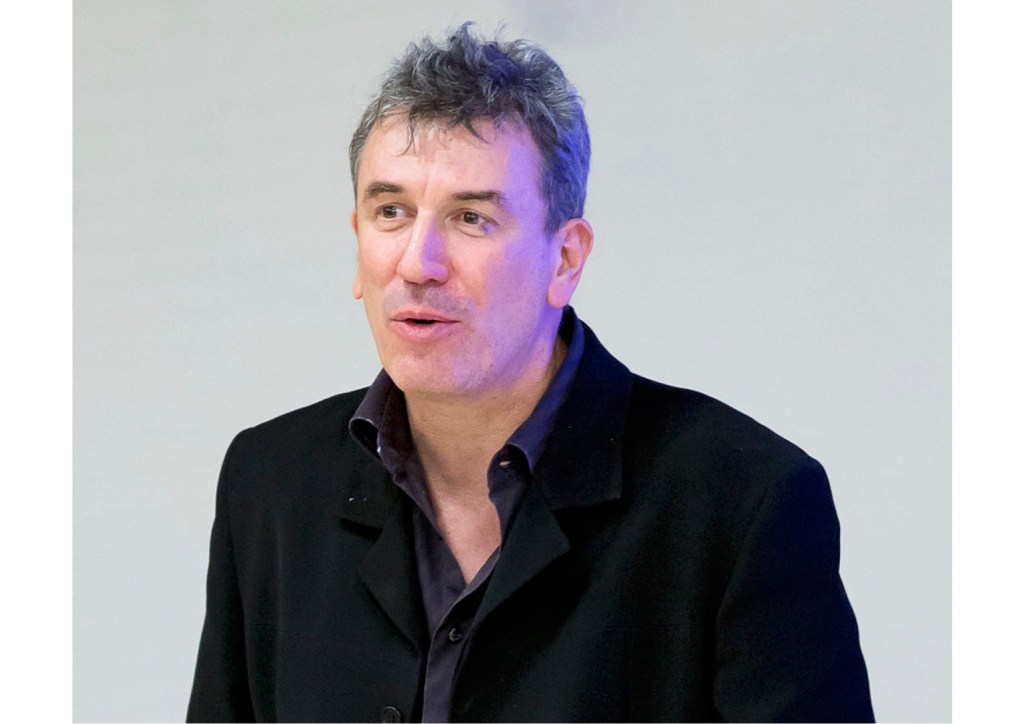
Professor Eric Gaussier
Professor of Computer Science
University Grenoble Alps
Abstract:
We’ll first discuss in this presentation causal discovery and reasoning in several causal abstractions, for both time series and standard data. We will in particular detail results on cluster DAGs with potential cycles, which corresponds to a setting in which partition admissibility is relaxed. We will then discuss the causal reasoning capacity of Large language Models (LLMs) and will present a recent work on leveraging the predictive power of LLMs to infer causal relations between only two sequences of events.
Research fields: machine learning, information retrieval, computational linguistics
My research lies at the intersection machine learning, information retrieval and computational linguistics. The data on which I have primarily worked are large-scale, multlingual collections and I am particularly interested in theoretical models that explain and take into account the properties of the collections considered, and in large-scale, pratical implementations of these models. I have also been interested in modeling how (textual) information is shared in social (content) networks, and how such networks evolve over time. I have also worked on improving job scheduling techniques through machine learning, and in learning representations for different types of sequences, as texts and time series.
Source: https://ama.liglab.fr/~gaussier/

